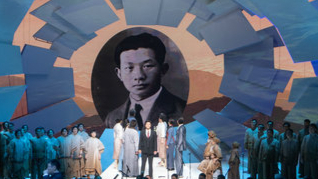
Nie Er
聂耳
- 分类: 艺术瑰宝
- ID: 1862417777683144705
Home CategoryArtsNie ErPlay4 minsNie Er, originally Nie Shouxin, was born in February, 1912, in Kunming, China. Amidst societal upheaval, he pursued music passionately, becoming a self-taught musician skilled in various instruments. His career began in Kunming and flourished in Shanghai.ShareCatalogue1. Early Life and Education2. Career and Contributions3. Legacy and Influence4. Commemoration and Cultural Impact
Early Life and Education
Nie Er, whose real name was Nie Shouxin, was born in February, 1912, in Kunming, Yunnan province, China. He grew up in a time of great social and political upheaval in China. From an early age, Nie showed a keen interest in music, which led him to pursue studies in that field. Despite the challenges he faced, he became a self-taught musician, learning to play a variety of instruments. His musical journey began in Kunming and later took him to Shanghai, where he would significantly develop his career.
Career and Contributions
Nie Er is extolled as one of China's most significant composers, particularly known for his contributions to the Chinese new music movement in the early 20th century. He was a leading figure in creating music that resonated with the struggles and aspirations of the Chinese working class. Throughout his short life, Nie composed over 20 songs, as well as musical scores for films and theatrical productions. His works have been celebrated for their revolutionary fervor and the way they encapsulate the spirit of the times.
One of his most notable contributions is the composition of the song "March of the Volunteers" in 1935, with lyrics by poet Tian Han. This song later became the national anthem of the People's Republic of China. It was initially featured in the film "Children of Troubled Times," produced by the Diantong Film Company, and quickly became a rallying cry for those fighting against Japanese aggression.
Legacy and Influence
Nie Er's influence extends beyond the composition of the national anthem. He is often referred to as "the people's musician" due to his dedication to creating music that spoke to the experiences and struggles of ordinary Chinese people. His compositions, such as "Song of Graduation" and "Song of Newspaper Boys," reflect the socio-political landscape of his era and continue to be performed and celebrated in China. Despite his premature death at the age of 23 in a swimming accident in Japan, Nie's legacy endures through his music and its role in Chinese culture and history.
In the years following his death, numerous performances and adaptations of Nie's works have been staged to honor his memory. Productions like "Serenata — Songs of Nie Er" and acrobatic shows produced by the Yunnan Provincial Acrobatic Troupe have brought his compositions to new audiences, reinforcing his status as a cultural icon.
Commemoration and Cultural Impact
Nie Er's contributions to Chinese music and culture are commemorated through various events and performances that seek to keep his spirit alive. The Shanghai Opera House and the China National Symphony Orchestra are among the institutions that have highlighted his works in their programs. His life and legacy have been explored through opera productions, dance dramas like "Rexue Dangge (Ode to the Hotblooded Youth)," and musical concerts that celebrate his enduring influence.
Nie's music, characterized by its emotive power and revolutionary themes, continues to inspire new generations of musicians and composers. Through educational initiatives and performances, young musicians are exposed to his works, ensuring that his legacy is not forgotten. As a symbol of national pride and resilience, Nie Er's contributions to Chinese music and culture remain significant, providing a historical connection to the past and a source of inspiration for the future. Photo Gallery(2 pictures)CategoriesArtsTagArtistsRelatedShandong Opera and Dance Drama TheaterDance of the Golden SnakeMarch of the VolunteersCatalogue1. Early Life and Education2. Career and Contributions3. Legacy and Influence4. Commemoration and Cultural Impact- - - []








